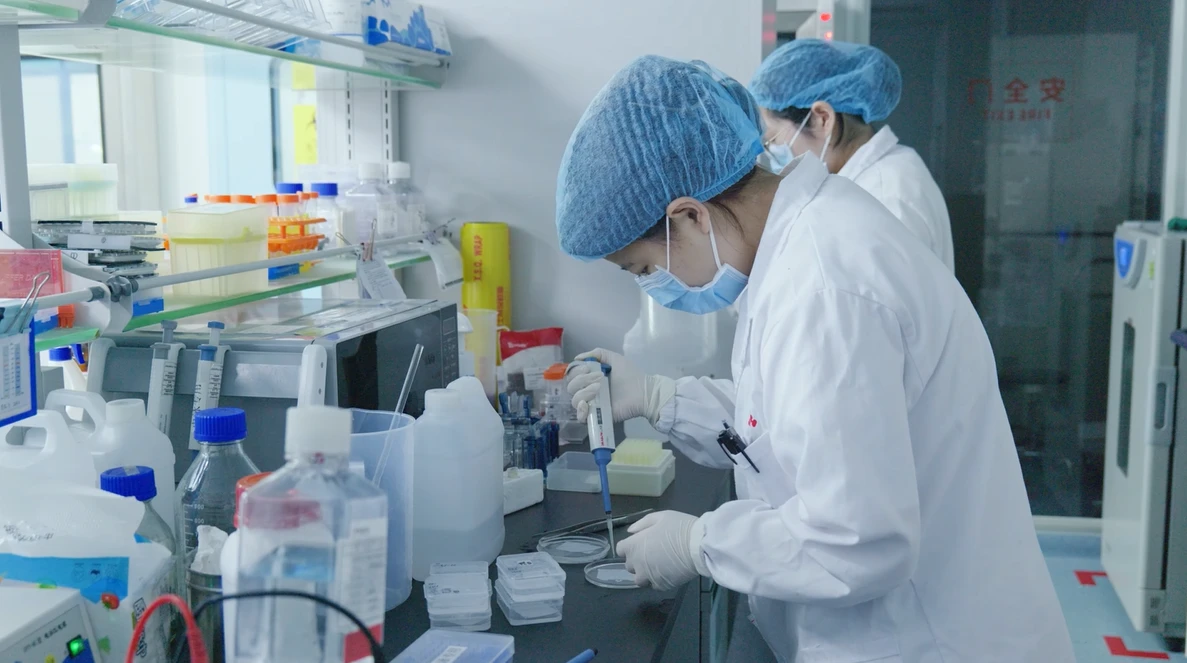
advanced in vivo models for dermatological research
HuaTeng Biotechnology provides a comprehensive portfolio of advanced in vivo models for dermatological research. These models are essential for investigating the pathophysiology of inflammatory, neoplastic, traumatic, and aesthetic skin conditions, and for evaluating the efficacy of novel topical, systemic, and surgical therapies.

|
Allergic Contact Dermatitis Model |
Induced by topical application of a hapten (e.g., DNFB, Oxazolone) on sensitized mouse ears or shaved skin, modeling T-cell mediated delayed-type hypersensitivity. |
|
Psoriasis Model |
• Imiquimod-Induced Model: Topical application of the TLR7/8 agonist Imiquimod on mouse skin induces psoriasiform inflammation, keratinocyte hyperproliferation, and scale formation. |
|
Atopic Dermatitis (Eczema) Model |
• MC903-Induced Model: Topical application of the vitamin D3 analog calcipotriol (MC903) induces robust AD-like inflammation. |
|
Acne Model |
• Testosterone-Induced Model: Injected testosterone in rats to stimulate sebaceous gland hyperplasia. |
|
Vitiligo Model |
• Chemical Depigmentation: Topical monobenzone application. |
|
Infectious Skin Disease Model |
Induced by topical or subcutaneous inoculation of pathogens (e.g., Staphylococcus aureus, Candida albicans) on abraded skin. |
|
Skin Cancer Model |
• Chemical Carcinogenesis: Two-stage protocol using a initiator (DMBA) and a promoter (TPA). |
|
Androgenetic Alopecia Model |
• Testosterone/ Dihydrotestosterone (DHT) Implantation in mice. |
|
Skin Incision Model |
A simple, reproducible full-thickness linear incision on the dorsum, sutured or unsutured, to study early wound healing and tensile strength. |
|
Full-Thickness Excisional Wound Model |
Creation of a standardized circular full-thickness skin defect on the dorsum. Often used as a critical-sized defect to study wound contraction, re-epithelialization, and granulation tissue formation. |
|
Infected Cutaneous Wound Model |
The excisional wound is inoculated with a specific bacterial strain (e.g., Pseudomonas aeruginosa, S. aureus) to study infected wound healing and antimicrobial efficacy. |
|
Pressure Ulcer Model |
Induced by placing magnets on opposite sides of a skin fold and applying a repetitive pressure-force, or by ischemic compression using a customized device, to model decubitus ulcer formation. |
|
Scald Burn Model |
Created by exposing a defined area of shaved skin to hot water for a precise duration. Allows for controlled depth of injury. |
|
Contact Burn Model |
Using a pre-heated brass or copper bar applied to the skin with a standardized weight and time to create a uniform burn. |
|
Burn Depth Models |
• Superficial Second-Degree Burn: A scald or contact burn that damages the epidermis and superficial dermis, typically blistering and healing with minimal scarring. |
|
Frostbite Model |
Induced by applying a metal probe cooled with liquid nitrogen or a dry ice/alcohol mixture to the skin for a set time, modeling cold-induced tissue necrosis. |
|
Skin Grafting Model |
• Autografting (graft from the same animal) • Allografting (graft between genetically different animals of the same species) • Xenografting (graft from a different species) |
|
Ear Hyperplastic Scar Model |
A full-thickness wound on the rabbit ear that heals with a raised, hypercellular scar due to the absence of wound contraction. |
Global Compliance: AAALAC-accredited facilities with IACUC protocols aligned with EU Directive 2010/63/EU and USDA standards.
Advanced Imaging: DSA, IVUS, angiography, and micro-CT for real-time device performance tracking.
Custom Model Development: Species-specific animal models for complex disease states.
Histopathology Suite: SEM/TEM analysis with GLP-grade reporting for PMDA/CE Mark submissions.