animal models for musculoskeletal disorders and trauma research
Our integrated platform supports a wide range of orthopedic and rheumatologic studies—from arthritis and critical-sized bone defects to spinal injuries, fracture healing, and metabolic bone diseases. With comprehensive capabilities in surgical modeling, advanced imaging, biomechanical testing, and histological analysis, we provide highly translational models to accelerate your therapeutic development in musculoskeletal medicine.

|
Rheumatoid Arthritis (RA) Model |
• Collagen-Induced Arthritis (CIA): The gold-standard model, induced by immunization with bovine type II collagen and Freund's adjuvant. |
|
Acute Gouty Arthritis Model |
Induced by intra-articular injection of monosodium urate (MSU) crystals into a joint (e.g., rodent ankle) to simulate acute crystal-induced inflammation and pain. |
|
Knee Osteoarthritis (KOA) Model |
• Surgical: Destabilization of the medial meniscus (DMM) or anterior cruciate ligament transection (ACLT). |
|
Frozen Shoulder Model |
Typically induced by immobilization of the rodent shoulder joint or by surgical injury/injection of TGF-β to model adhesive capsulitis and fibrosis. |
|
Critical-Sized Bone Defect Models |
• Femoral Drill Hole Bone Defect: A standardized drill hole in the femoral condyle or diaphysis. |
|
Mandibular & Alveolar Bone Defect |
• Mandibular Defect Model: A defect created in the jawbone, relevant for dental and craniofacial research. |
|
Joint & Soft Tissue Injury Models |
• Knee Joint Cartilage Injury Model: Created by chondral or osteochondral defect to model cartilage repair. |
|
Spinal Injury Model |
• Atlantoaxial Injury Model: Involves injury or instability at the C1-C2 junction of the spine. |
|
Closed Fracture Model |
Typically induced by a controlled, closed three-point bending technique using a specialized apparatus, often in the tibia or femur, to create a standardized fracture without open surgery. |
|
Open Osteotomy Model |
Involves surgical creation of a fracture (osteotomy), which can be stabilized with internal or external fixation (e.g., plates, pins) for more controlled healing studies. |
|
Radius Fracture Model |
A specific model focusing on fracture healing in the forearm bone, often stabilized with internal fixation. |
|
Complete Spinal Cord Transection Model |
Involves complete surgical transection of the spinal cord at a specific level (e.g., thoracic) to study severe spinal cord injury and axonal regeneration. |
|
Lumbar Intervertebral Disc Degeneration Model |
Induced by puncture of the intervertebral disc with a needle or by mechanical overload to simulate disc degeneration and low back pain. |
|
Spine Fusion Model |
Involves surgical decortication of vertebrae and implantation of graft material (autograft/allograft/bone substitutes) to model spinal fusion surgery. |
|
Post-Laminectomy Anti-Adhesion Model |
Evaluates strategies to prevent fibrotic tissue adhesion following a laminectomy (removal of the lamina) procedure. |
|
Muscle Injury & Disease |
• Acute Skeletal Muscle Contusion Model: Induced by a controlled impact to a muscle (e.g., tibialis anterior) to model crush injury. |
|
Metabolic Bone Disease |
• Osteoporosis Model: Induced by ovariectomy (OVX) in females to model postmenopausal osteoporosis, or by glucocorticoid administration. |
|
Surgical Intervention Models |
• Anterior Cruciate Ligament Reconstruction Model: A complex surgery in small or large animals to model the clinical ACL reconstruction procedure and graft healing. |
|
Infection & Inflammatory Models |
• Osteomyelitis Model: Induced by direct bone inoculation with bacteria (e.g., Staphylococcus aureus) to model bone infection. |
Global Compliance: AAALAC-accredited facilities with IACUC protocols aligned with EU Directive 2010/63/EU and USDA standards.
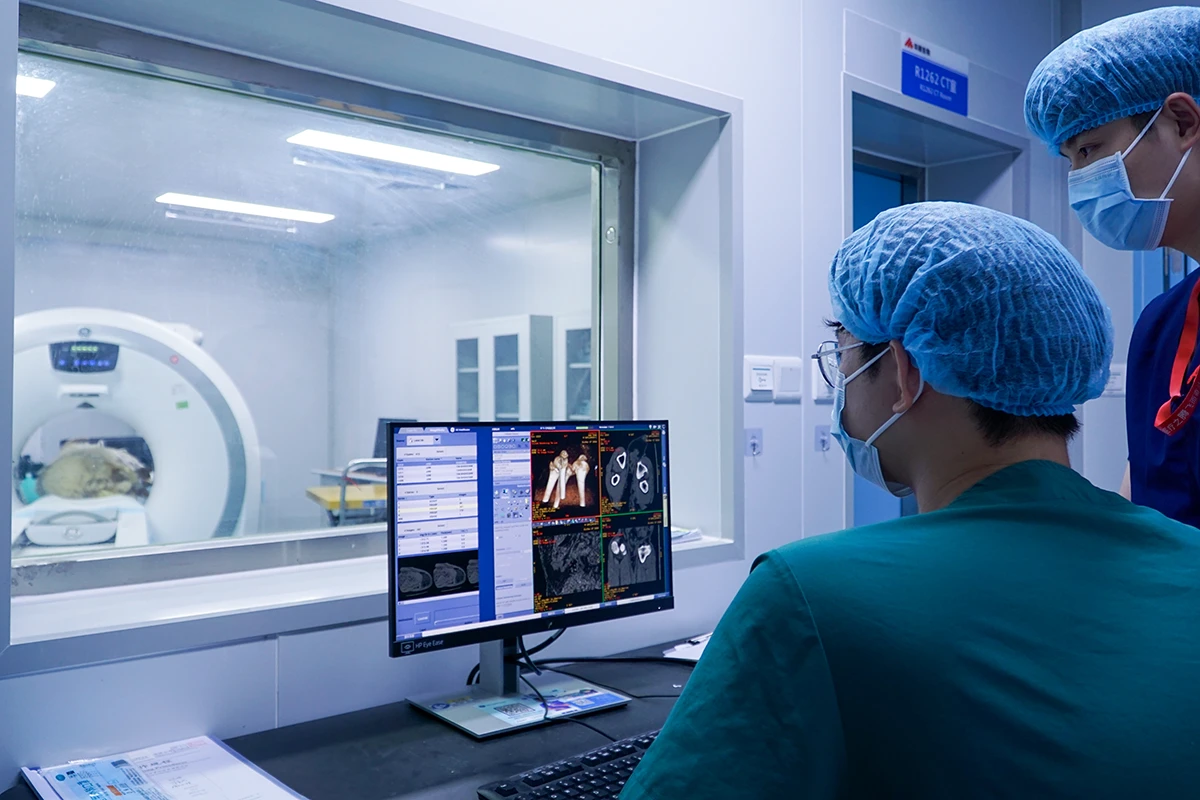
Advanced Imaging: DSA, IVUS, angiography, and micro-CT for real-time device performance tracking.
Custom Model Development: Species-specific animal models for complex disease states.
Histopathology Suite: SEM/TEM analysis with GLP-grade reporting for PMDA/CE Mark submissions.